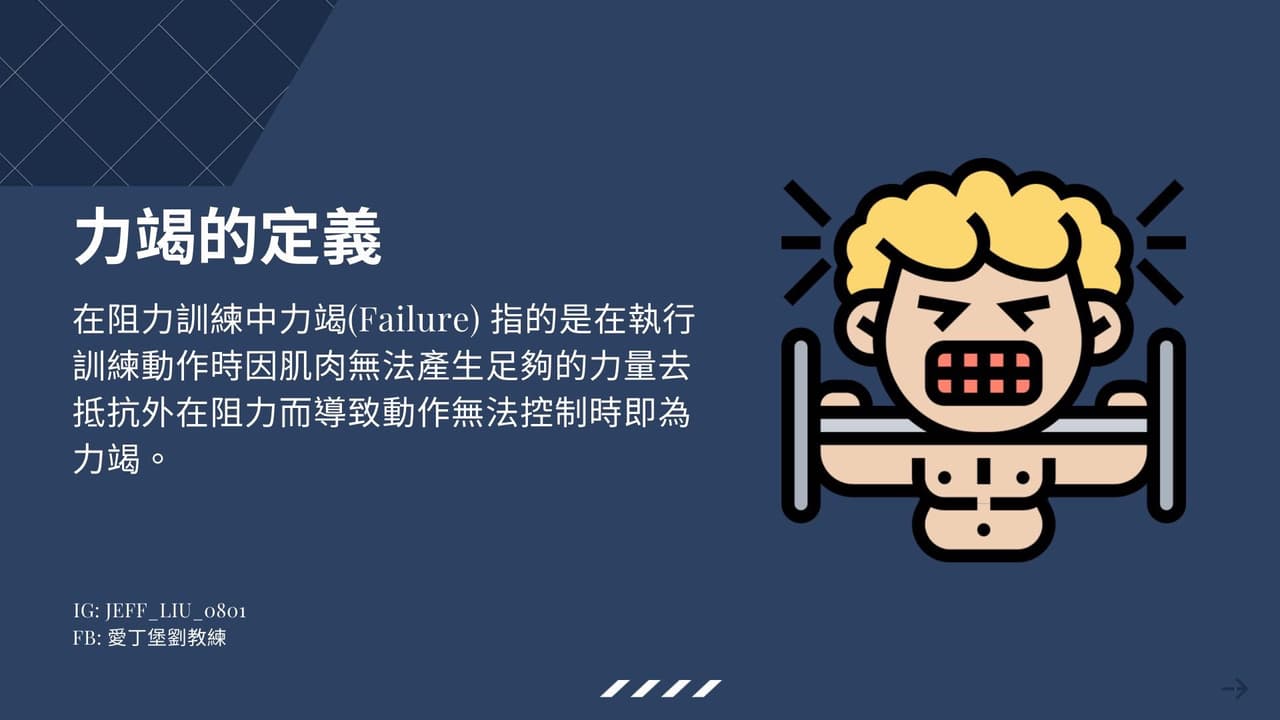
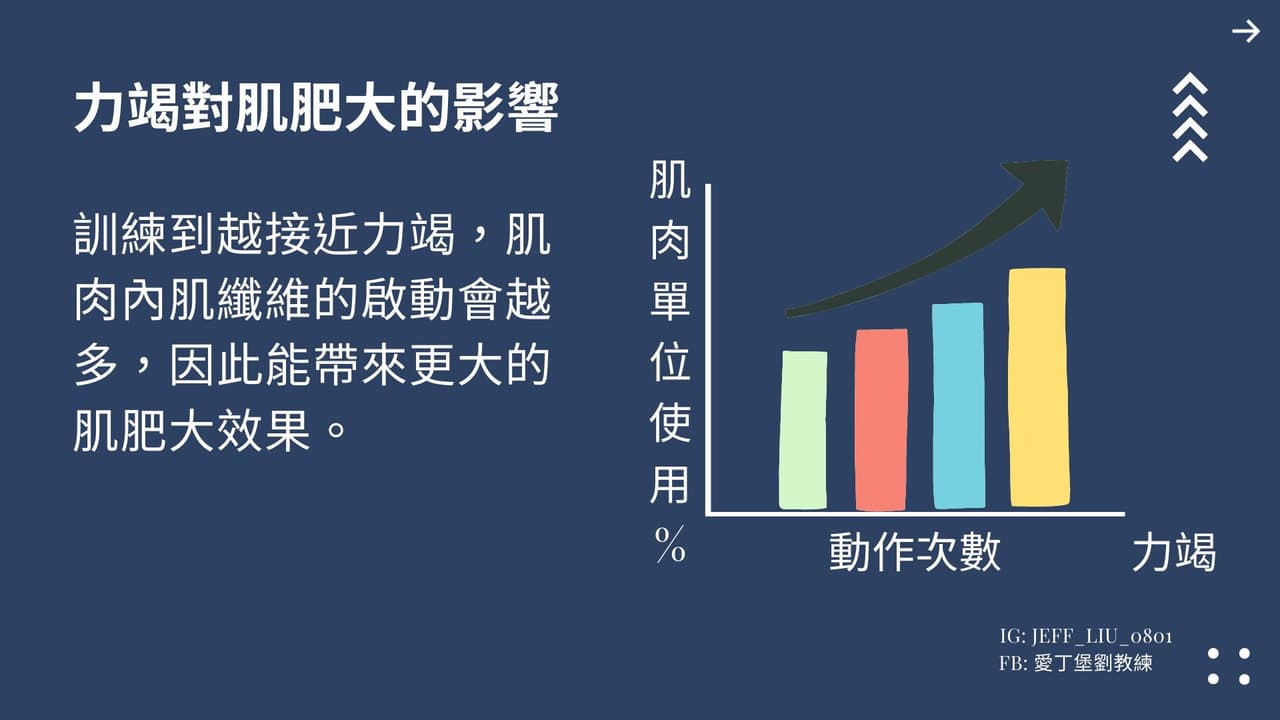
首先我們先討論力竭(Failure)的定義為在進行阻力訓練動作時當肌纖維收縮不能再產生足夠的力量對抗外在阻力去控制訓練動作時即為力竭,而一些研究指出訓練至力竭或接近力竭能達到較高的肌肉神經元啟動閥值 (Muscle Motor Units),意旨當越接近力竭時,肌肉內越大部分的肌纖維會被啟動,從而能夠更加完整的刺激肌肉內肌纖維以最大化肌肥大的效果。
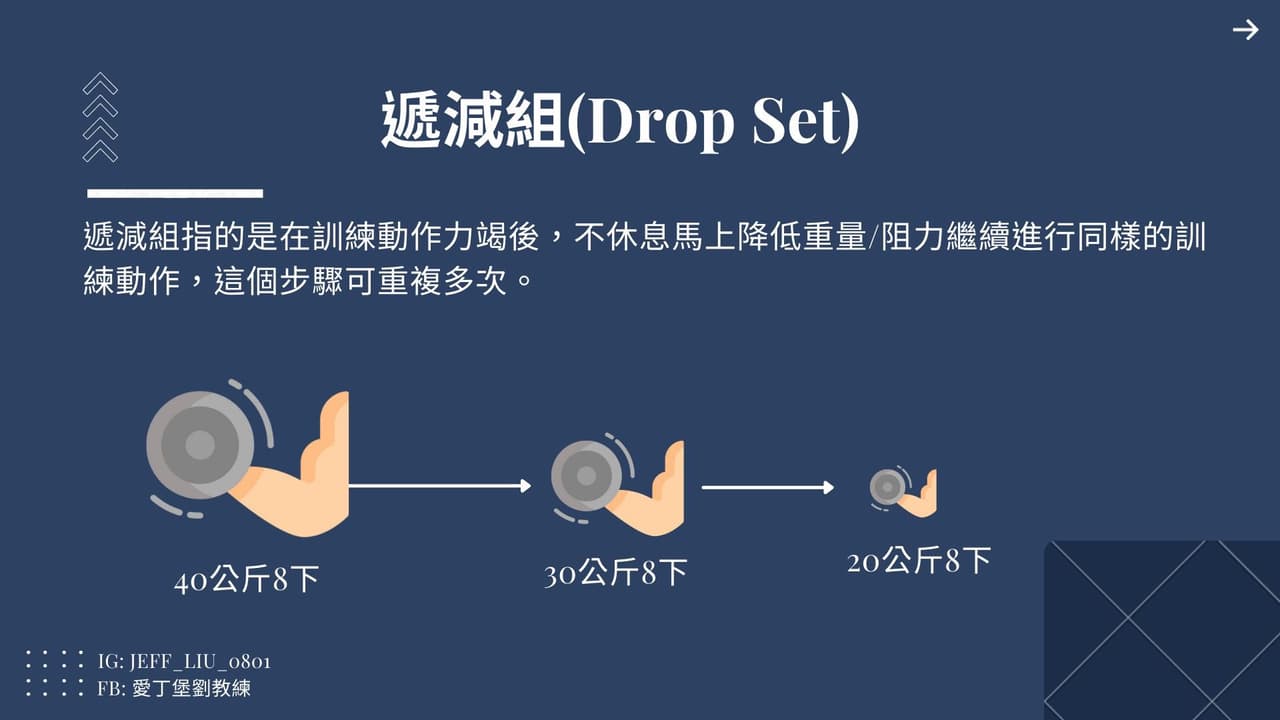
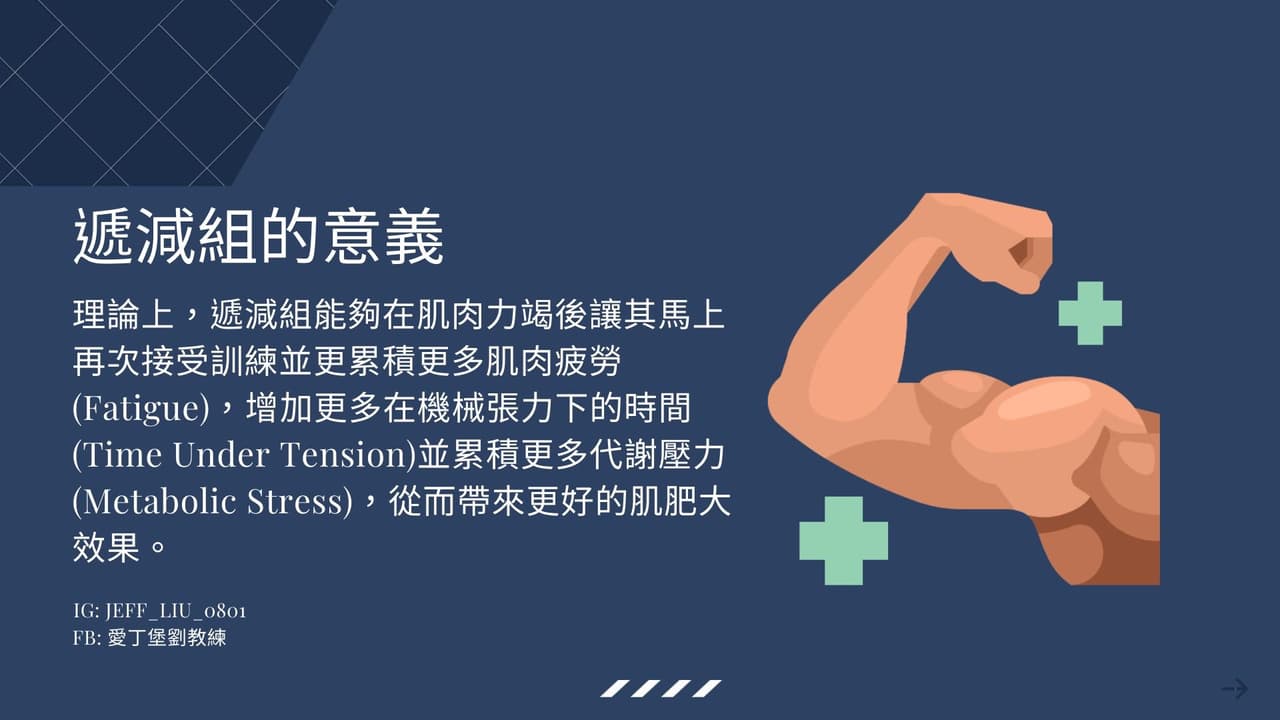
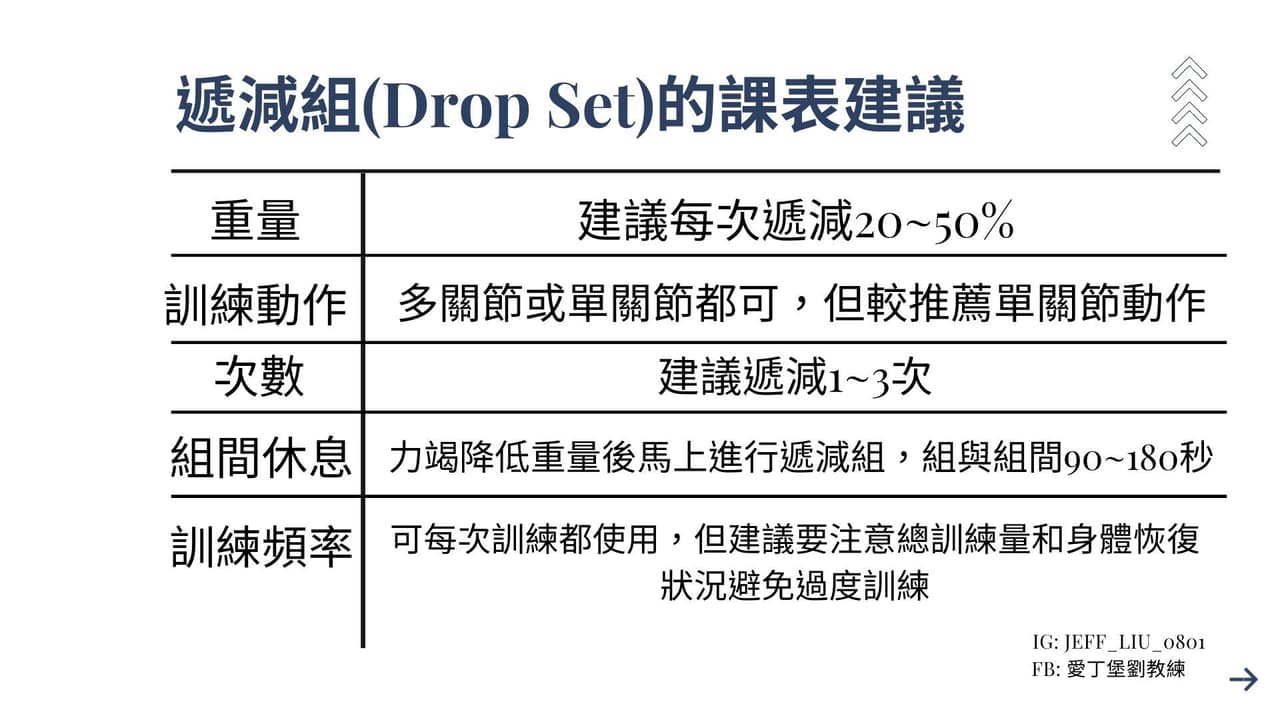
遞減組的定義為進行阻力訓練動作至力竭後,將原本的阻力降低後不休息直接繼續進行原本訓練動作,通常會至少減低阻力20%以上,但目前還沒有特別的共識或規範應降低阻力至多少%,但普遍約為減輕至原訓練重量50-75%,運用這種方式從而產生更巨大的肌肉疲勞。遞減組指稱能提高肌肉的生長效果,因為增加了更多的肌肉神經單元的疲勞和肌肉在機械張力下的時間(Time Under Tension)及提高代謝壓力和增進肌肉充血,因此甚至也有人執行多次的遞減組(例如:40公斤6下→30公斤6下→20公斤6下)。
最初的研究(Goto et al., 2003)發現遞減組能大幅提高訓練後的肌肉內肌肉生長賀爾蒙濃度,兩組人馬在進行高強度(90% 1RM)腿伸(Leg Extension)後,一組馬上再接著進行遞減進行低強度(50% 1RM)的訓練,運動後檢測發現有進行遞減組的受試者,體內生長賀爾蒙濃度比沒有進行遞減組高出許多,但近期有越來越多研究(Schoenfeld, 2013)提出反對或質疑的聲音,指出運動後急性的體內內分泌改變對長期肌肥大其實可能影響不大或影響在個體之間(有藥沒藥?ㄏㄏ)差異很大。
其他研究則是證明了進行遞減組和一般訓練相比,遞減組訓練就一段時間後的訓練結果(≧6周)而言的確可能有更佳的肌肥大效果,但這個肌肥大效果的提高可能只是源自肌肥大與訓練量的劑量反應關係(Dose-Response Relationship)下,單純是由於遞減組帶來"更高的訓練量"所以有"更佳的肌肥大效果"。
References:
1. Fink J, Schoenfeld BJ, Kikuchi N, and Nakazato K. Effects of drop set resistance training on acute stress indicators and long-term muscle hypertrophy and strength. J Sports Med Phys Fitness, 2017. doi: 10.23736/S0022-4707.17.06838-4 [Epub ahead of print].
2. Fisher JP, Carlson L, and Steele J. The effects of breakdown set resistance training on muscular performance and body composition in young men and women. J Strength Cond Res 30: 1425–1432, 2016.
3. Goto K, Sato K, and Takamatsu K. A single set of low intensity resistance exercise immediately following high intensity resistance exercise stimulates growth hormone secretion in men. J Sports Med Phys Fitness 43: 243–249, 2003.
4. Ozaki H, Kubota A, Natsume T, Loenneke JP, Abe T, Machida S, and Naito H. Effects of drop sets with resistance training on increases in muscle CSA, strength, and endurance: A pilot study. J Sports Sci 36: 691–696, 2017.
5. Schoenfeld, B., & Grgic, J. (2018). Can drop set training enhance muscle growth?. Strength & Conditioning Journal, 40(6), 95-98.
6. Schoenfeld BJ. Postexercise hypertrophic adaptations: A reexamination of the hormone hypothesis and its applicability to resistance training program design. J Strength Cond Res 27: 1720–1730, 2013.